If you have a deck or patio directly outside your home, adding overhead protection can completely change how you use the space. An attached pergola can provide shade, protection from the elements, architectural interest, or even a rain-proof outdoor living area—all while creating a natural transition between your home and backyard.
But not all attached pergolas serve the same purpose.
Depending on the design, an attached pergola kit can function as a deck covering, a shade structure, a deck roof for rain, or simply an architectural accent over a garage, door or window.
Here’s what to know about attached pergolas and the different options available.
What Is an Attached Pergola?
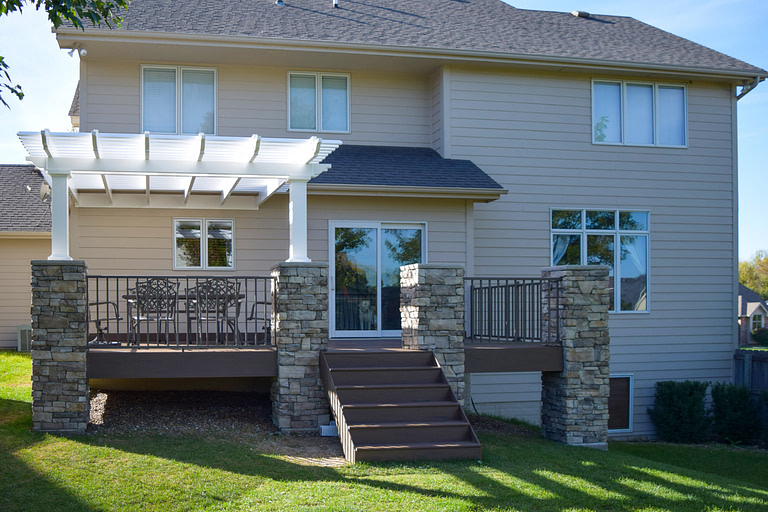
An attached pergola is a pergola that connects directly to your home or another existing structure rather than being supported entirely by its own posts.
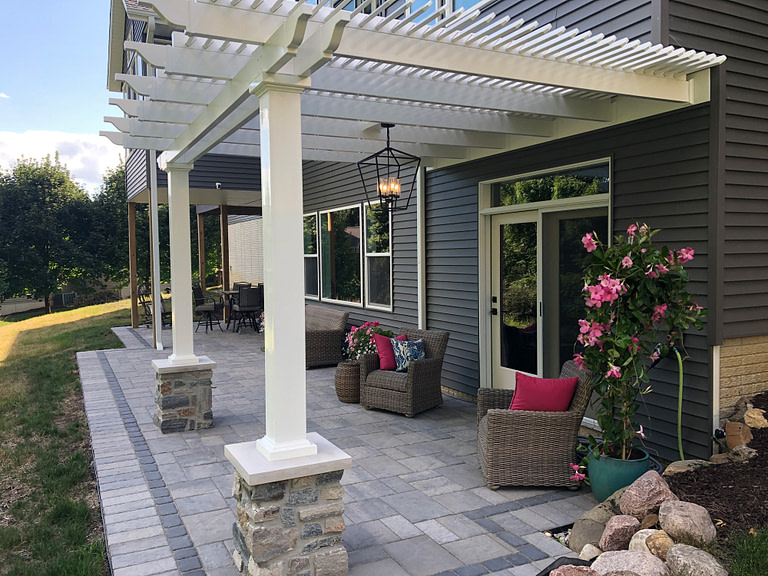
Most full-size pergolas attached to a house use a ledger along the home to support one side of the pergola, with posts supporting the outside edge.
This is different from a freestanding pergola, which typically requires posts on all four corners.
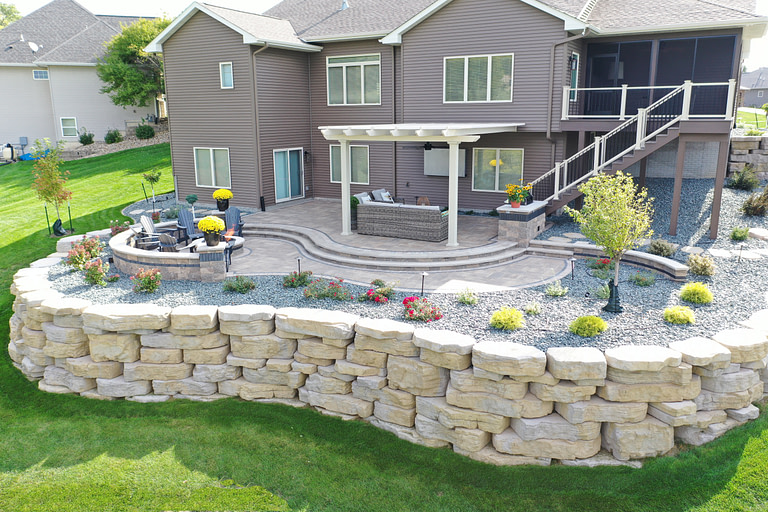
Attaching the pergola to the home can create a particularly natural extension of an existing deck or patio. Instead of feeling like a separate structure placed somewhere in the backyard, the pergola becomes part of the transition from your indoor living space to your outdoor living space.
It can also reduce the number of posts needed, helping keep the area underneath the pergola more open.
Why Add an Attached Pergola to a Deck or Patio?
For many homeowners, the biggest problem with an uncovered deck isn’t the deck itself—it’s how often the weather prevents them from enjoying it.
A deck exposed to direct afternoon sun can become uncomfortable during the hottest part of the day. Add rain to the equation and an otherwise beautiful outdoor space may sit unused much more often than expected.
An attached pergola can make that space considerably more functional.
Depending on the roof style you choose, an attached structure can:
- Create meaningful shade over a deck or patio
- Reduce direct sunlight near windows and doors
- Provide an outdoor deck covering for dining and entertaining
- Protect outdoor furniture from direct sun
- Create a more defined outdoor living area
- Add architectural interest to the back of a home
- Provide protection from rain with a solid-roof system
- Create a natural location for outdoor lighting, fans and other amenities
The key is determining how much protection you actually want.
At Heartland Pergolas, attached structures generally fall into three categories: attached shade pergolas, attached covered pergolas and attached eyebrow pergolas.
Attached Shade Pergolas
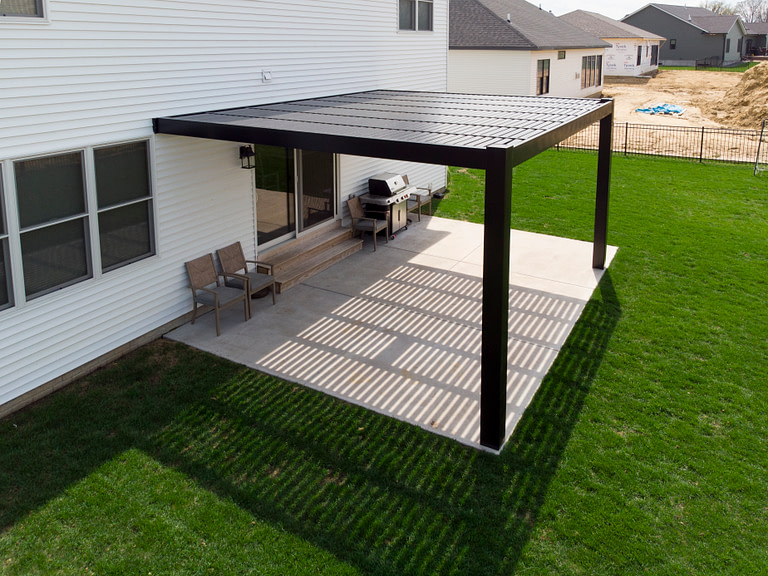
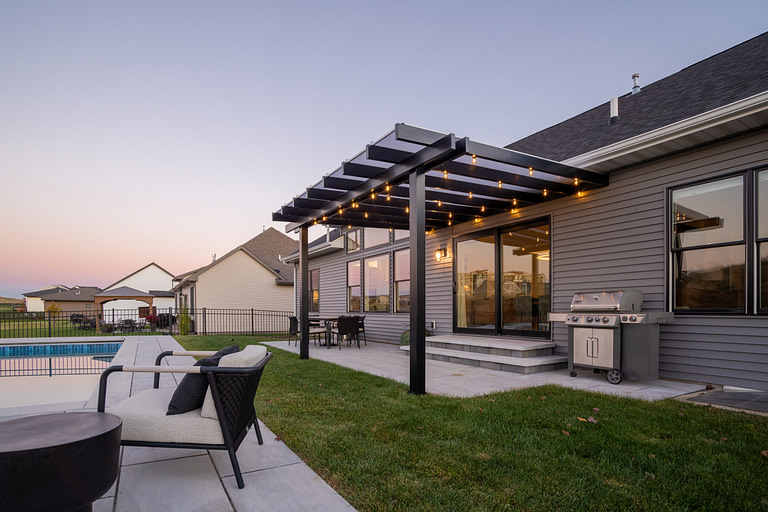
An attached shade pergola maintains the classic open-air look people associate with a pergola while providing significantly more shade than a purely decorative structure.
Heartland’s shade pergolas use fixed, angled purlins across the top of the structure. Homeowners can choose between 50%, 75% and 90% shade configurations, allowing you to determine how much direct overhead sunlight you want to filter.
Unlike a solid deck roof, air can still move through the pergola overhead. That makes a shade pergola a great option when your primary concern is direct summer sun rather than rain.
For example, an attached pergola over a west-facing deck can provide welcome afternoon shade while maintaining the open-air feeling of the deck.
Attaching the structure to the home also positions that shade directly against the house. Depending on the orientation of your home, this may help reduce direct sunlight reaching nearby doors and windows as well.
When Does an Attached Shade Pergola Make Sense?
Consider a shade pergola if your main priorities are:
- Reducing direct overhead sun
- Keeping an open-air outdoor environment
- Creating shade without building a completely solid roof
- Adding architectural interest to a deck or patio
- Maintaining airflow through the roof
- Defining an outdoor dining, grilling or seating area
If rain protection isn’t a priority, an attached shade pergola offers an attractive middle ground between an uncovered deck and a completely covered outdoor room.
Attached Covered Pergolas: A Deck Cover for Rain
Sometimes shade isn’t enough.
If your goal is to use your deck when the weather isn’t perfect, you need a roof designed to keep water out.
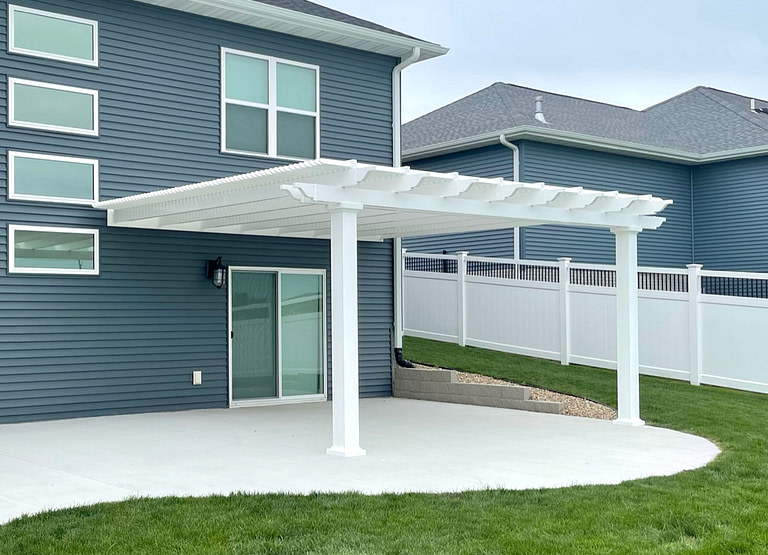
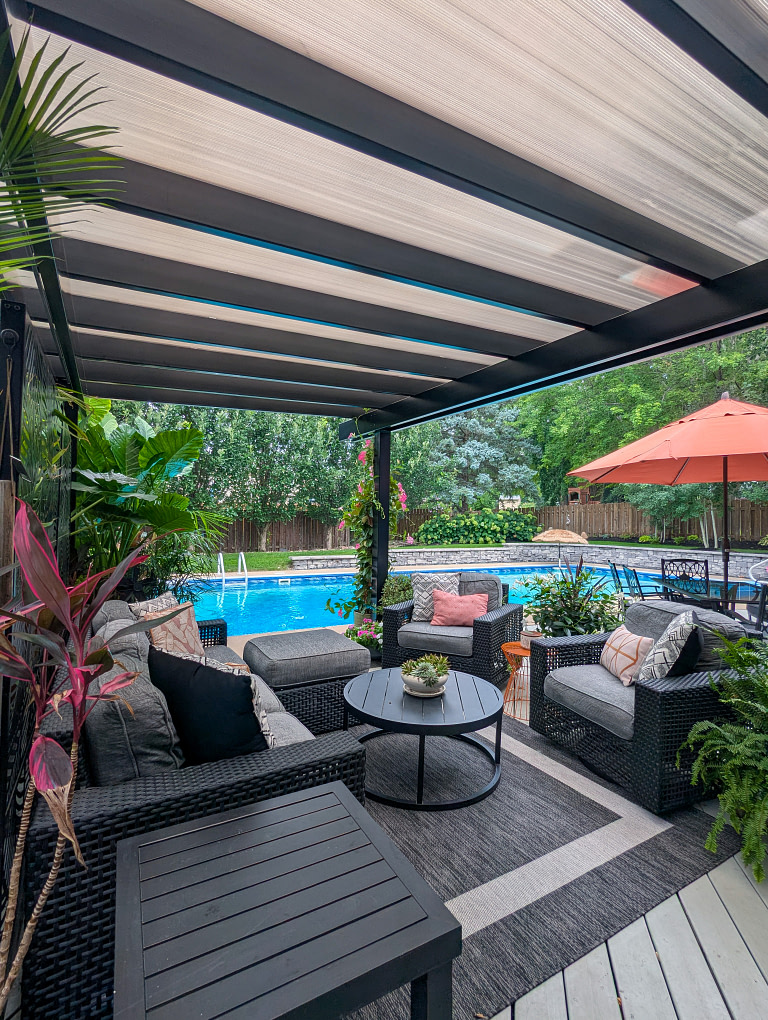
Heartland’s Elements Rain Proof Pergola combines a pergola-style aluminum framework and vinyl exterior with solid standing-seam polycarbonate roof panels. The result is an attached vinyl patio cover that provides both shade and rain protection.
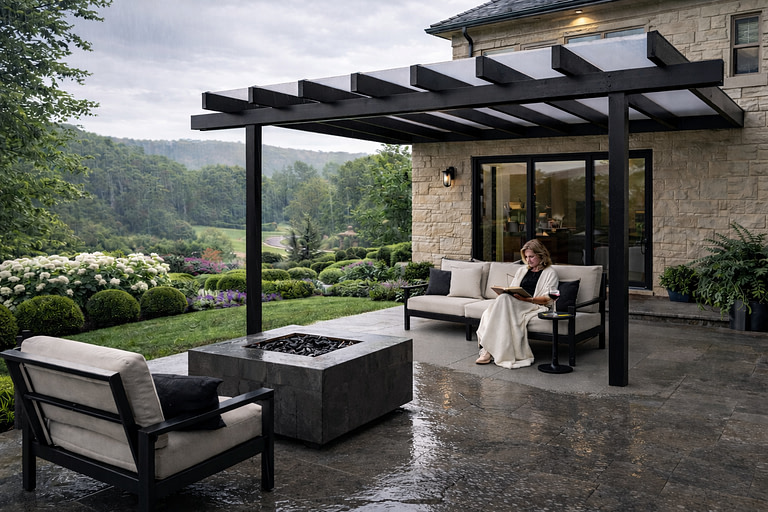
This makes an Elements pergola considerably different from a traditional open-roof pergola.
The polycarbonate roof panels are watertight, block UV rays and still allow filtered ambient light into the space below. Rather than creating a dark extension off the back of your house, the translucent roofing helps maintain natural light while providing overhead protection.
For homeowners searching for deck covers for rain, a covered pergola can provide the permanent outdoor structure they’re actually looking for.
A Pergola or a Deck Roof?
Terminology can get confusing here.
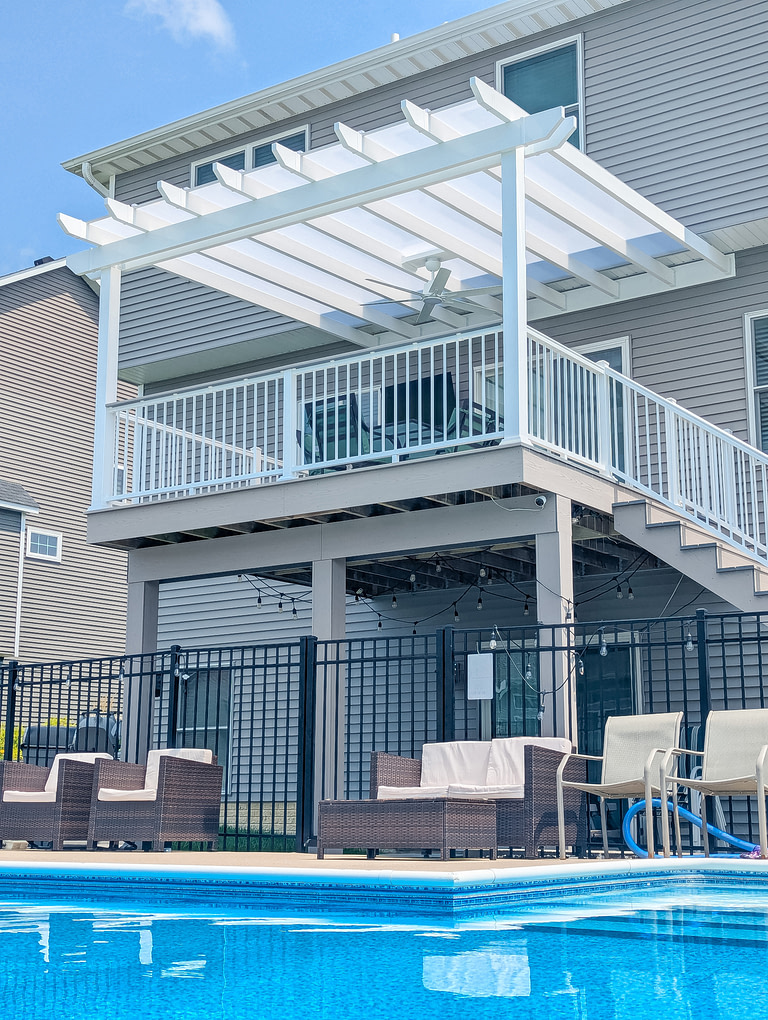
Homeowners may search for a deck roof, patio roof, covered deck, deck canopy, permanent deck awning or patio cover without necessarily looking for a traditional house-style shingled roof.
An attached covered pergola can fill much of that same role.
It creates a permanent overhead structure that connects to the home and protects the space below, but maintains the appearance and character of a pergola.
That makes it particularly appealing when you want to create an outdoor living area without making your deck feel like a fully enclosed addition to the house.
When Does an Attached Covered Pergola Make Sense?
A solid-roof pergola may be the better choice when you want:
- A deck covering for rain
- Protection from direct sunlight and UV exposure
- A more weather-resistant outdoor dining or seating area
- Protection for outdoor furniture
- A permanent alternative to temporary canopies or fabric awnings
- Natural light underneath your covered area
- A structure that visually connects your house and outdoor living space
For homeowners specifically looking for a permanent awning for decks, an attached covered pergola is worth considering because it combines permanent construction with the appearance of a finished outdoor living structure.
Attached Eyebrow Pergolas & Garage Pergolas
Not every attached pergola needs to cover a patio.
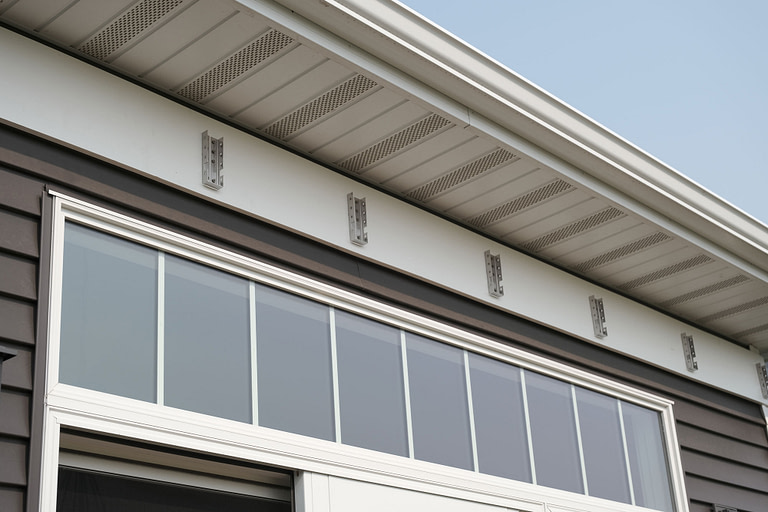
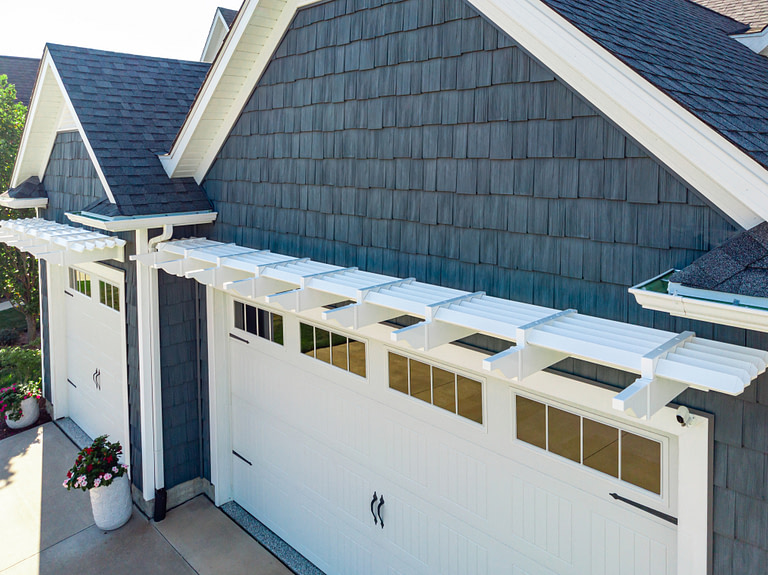
An eyebrow pergola is a smaller structure attached directly to a home, most commonly above a garage door, entry door or window.
You may also hear these referred to as garage pergolas.
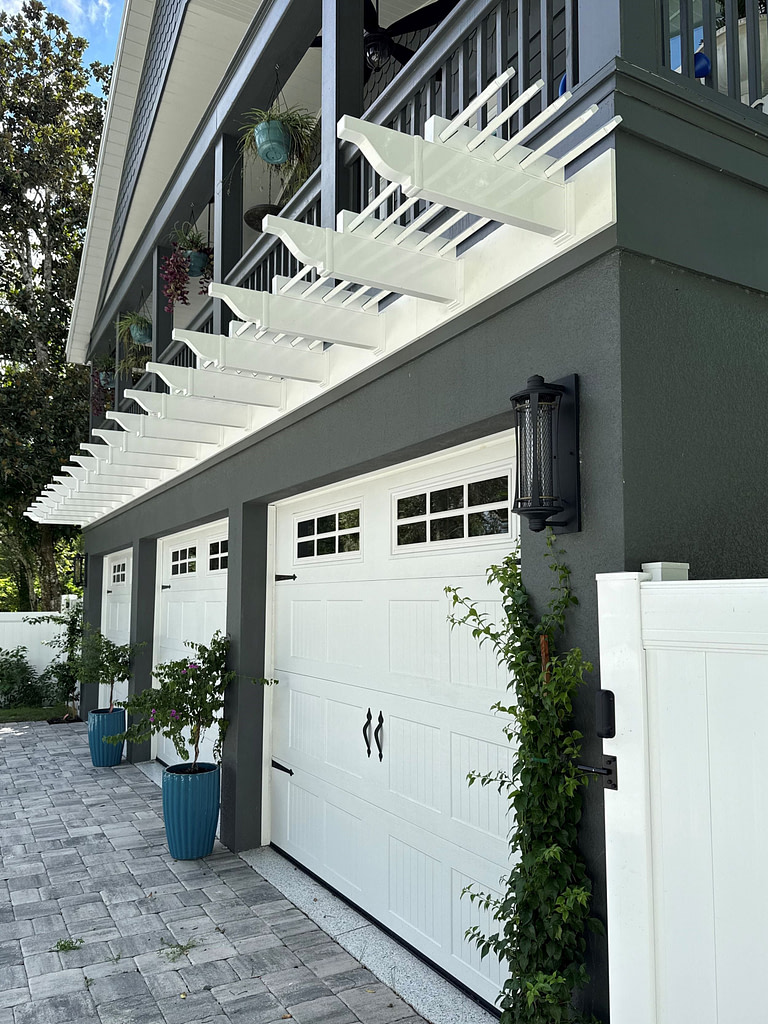
Unlike a full-size attached pergola, an eyebrow pergola doesn’t require posts extending to the ground. Instead, it attaches to the structure and projects outward from the wall.
Its primary purpose is architectural.
A large garage door can create a substantial blank area on the front of a house. Adding an eyebrow pergola introduces depth, shadow and architectural detail that can dramatically change the appearance of that space.
Heartland eyebrow pergola kits are 2 feet deep and can be sized or combined to accommodate different widths. They use aluminum-reinforced rafters with a premium vinyl exterior for a durable, low-maintenance architectural accent.
Although primarily decorative, an eyebrow pergola can also provide a small amount of shade and weather protection over the area below.
They work especially well:
- Above single or multiple garage doors
- Over exterior doors
- Above windows
- On large blank exterior walls
- As an architectural accent on the front of a home
For homeowners who like the appearance of a pergola but don’t necessarily need a full outdoor living structure, an eyebrow pergola provides the same design language on a much smaller scale.
Why Choose Vinyl for an Attached Pergola?
Because an attached pergola becomes a prominent architectural feature of your home, material selection matters.
Heartland Pergolas combines an engineered extruded aluminum framework with a premium vinyl exterior.
The aluminum provides the structural strength inside the posts, beams and rafters, while the vinyl exterior provides a finished appearance without the ongoing maintenance associated with wood.
That means no routine painting, staining or sanding.
The aluminum framework also won’t rot, rust, warp or sag like materials commonly used in traditional outdoor structures.
This combination is particularly useful for a vinyl patio cover or attached pergola because the structure is designed to remain outside permanently through changing weather conditions.
The hollow structural components also provide opportunities to route electrical wiring through the pergola for additions such as lighting, ceiling fans, speakers or televisions.
Attached Pergola vs. Freestanding Pergola
Both designs can create excellent outdoor spaces, but the layout of your home often determines which makes more sense.
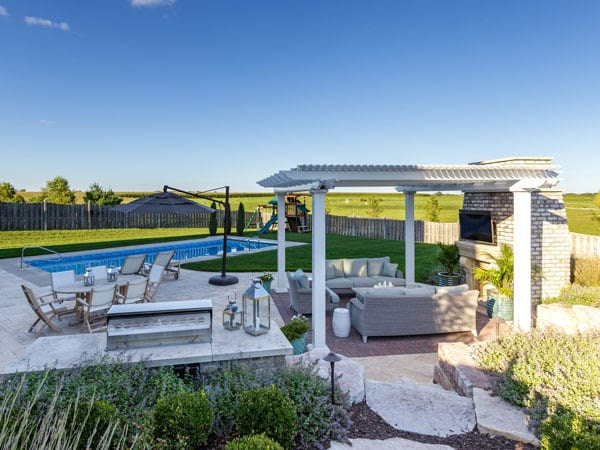
A freestanding pergola can be positioned almost anywhere and doesn’t depend on the house for structural support. This can be ideal for a pool area, detached patio, garden or another destination elsewhere in the yard.
An attached pergola makes the most sense when the outdoor living area is immediately adjacent to the home.
Because one side connects to the structure, an attached pergola generally requires fewer posts and creates a seamless transition from indoors to outdoors.
On a deck with railing, pergola posts can also often be coordinated with the existing railing layout, helping the finished space feel intentional rather than having posts scattered throughout the deck.
Planning to install the pergola yourself? See our step-by-step pergola installation videos to get a better idea of what’s involved before ordering.
Which Type of Attached Pergola Is Right for You?
Start by asking what problem you’re trying to solve.
If your deck is simply too sunny:
An attached shade pergola may provide the protection you need while maintaining an open-air environment.
If rain keeps you from using your deck:
Consider an attached covered pergola with a solid roof. It provides the **outdoor deck covering** necessary to use your space through a wider variety of weather conditions.
If you’re searching for a deck roof but don’t want a traditional roof addition:
A rain-proof attached pergola may provide the combination of protection, natural light and outdoor appearance you’re looking for.
If you want to add architectural interest to your home’s exterior:
An eyebrow or garage pergola can add dimension without requiring a full-size structure.
Turn Your Deck or Patio Into a More Usable Outdoor Space
A pergola doesn’t have to be a freestanding structure sitting in the middle of the backyard.
By attaching a pergola directly to your home, you can create an outdoor space that feels like a natural extension of the house itself.
Whether that means filtering the afternoon sun with an attached shade pergola, creating a true deck cover for rain with an Elements covered pergola, or adding architectural character with an eyebrow pergola, the right structure depends on how you want to use your space.
Heartland Pergolas offers attached pergola kits that can be customized to fit a wide variety of decks, patios and homes. Our pergolas combine an engineered aluminum framework with a low-maintenance vinyl exterior and are made in the USA.
Ready to see what an attached pergola would cost? Design your pergola online or contact our team for help finding the right attached pergola for your space.